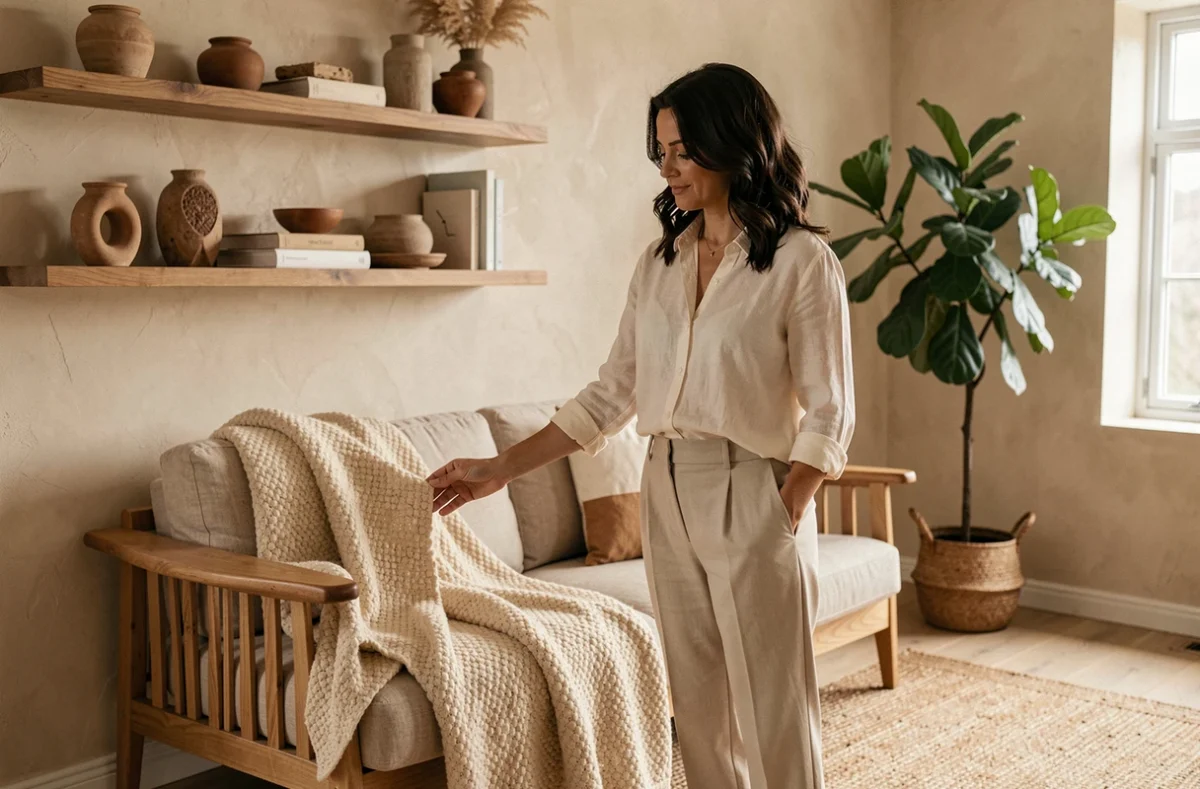
A new piece of furniture made from engineered wood can release formaldehyde and other volatile organic compounds for several weeks after installation. This finding, confirmed by the national indoor air quality survey conducted between 2020 and 2023, changes how we should approach choosing furnishings for our homes.
Creating a harmonious, comfortable interior is about more than coordinating colors or proportions: material composition, thermal comfort and the origin of your furniture matter just as much as aesthetics.
Indoor air quality and choosing furniture materials
Particleboard, MDF and some types of plywood use formaldehyde-based adhesives. This volatile organic compound is released slowly into the surrounding air, especially during the first few months. European regulations on formaldehyde also changed in 2026, providing a practical way to compare new furniture beyond style and price.
When choosing furniture, check its emissions class (E1, E0.5 or Super E0) to limit exposure. Low-emission furniture helps protect the air quality in your home, particularly in bedrooms and poorly ventilated rooms. Solid wood, metal and glass do not emit formaldehyde, making them reliable alternatives for enclosed living spaces.
After installing new furniture, ventilate the room daily for several weeks to reduce pollutant levels. This precaution applies to all furniture containing particleboard, including shelves, dressers and kitchen countertops.
To explore options that combine style and well-being, Zen et Déco’s furnishings include ranges designed to make your home both attractive and healthy.

Second-hand or new furniture: choosing what works for your needs and space
ADEME has published an overview of reuse and repurposing that includes furnishings, with data covering 2024. Reuse offers an alternative to buying new, and not just for budgetary reasons.
Second-hand furniture has already finished releasing its volatile compounds. After months or years of use, formaldehyde emissions have become negligible. For a child’s bedroom or an enclosed home office, this offers a genuine health benefit that new furniture cannot provide right away.
To incorporate a second-hand piece into a harmonious interior, check three things:
- Structural condition: joints, hinges and legs should be sturdy or repairable without specialist skills
- Exact dimensions: always measure before buying, as an oversized piece can throw off a room’s proportions faster than a mismatched color
- Finish compatibility: light sanding and a coat of oil or varnish are often all it takes to fit an older piece into a contemporary interior
A smart compromise is to buy new for functional areas (kitchen countertops and bathroom furniture exposed to moisture) and choose second-hand for living room furniture, dressers and bookcases.
Solar protection and thermal comfort: furnishings that shape well-being
Interior blinds and curtains control light, glare and privacy, but they do not block solar radiation before it passes through the glass. Heat enters the room, and then the fabric tries to contain it. The result: limited effectiveness in summer.
Exterior shading (shutters, adjustable external louvers and awnings) blocks solar radiation before it reaches the glass. Your choice should therefore take window orientation and hours of sunlight into account, rather than focusing solely on the decorative color scheme.
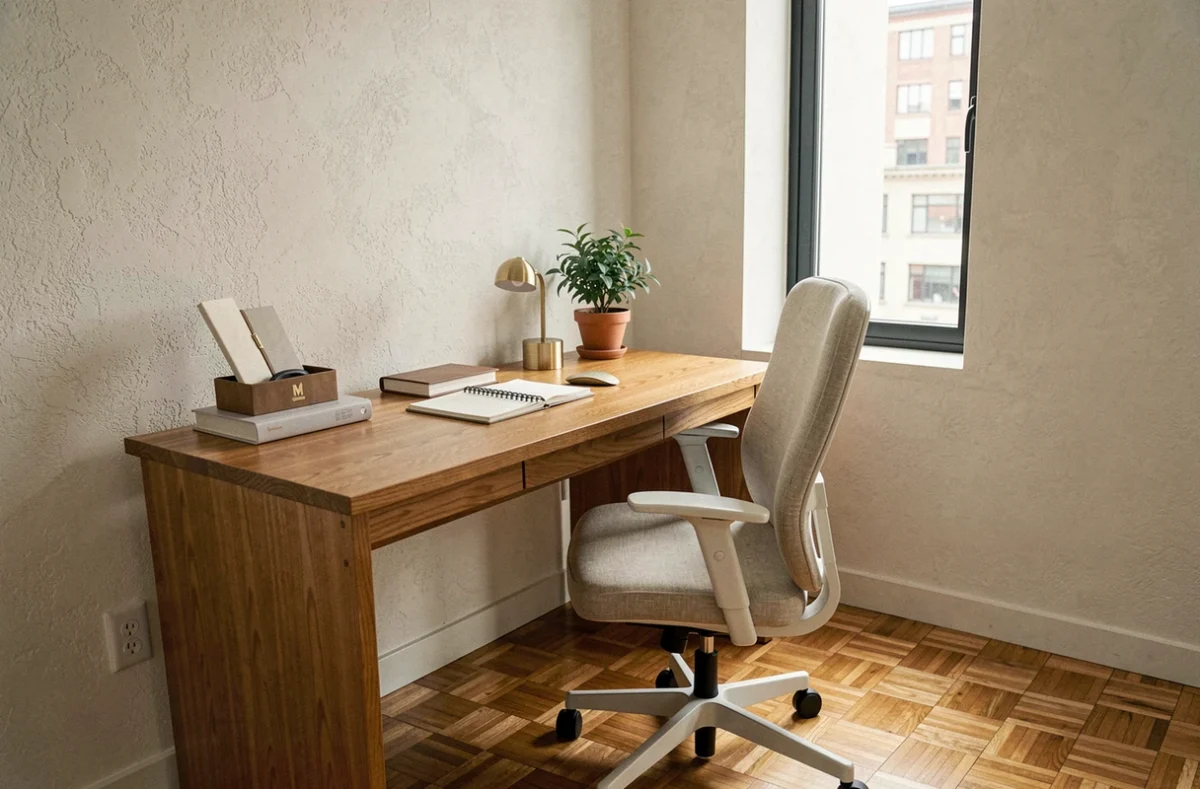
Combining sun protection with interior design
In practice, pairing exterior shading with a sheer curtain offers the best balance. Exterior shading manages heat, while the sheer curtain softens the light and complements the room’s decor.
South- and west-facing windows need exterior sun protection to keep your home comfortable in summer without relying on air conditioning. North- and east-facing windows get less sun, so light-filtering curtains may be enough to soften the light while complementing the living room or bedroom.
This choice of furnishings, often overlooked in decorating guides, has a greater impact on perceived temperature and everyday comfort than the color of a cushion or the finish of a coffee table.
Colors and proportions: the foundations of a harmonious interior
Once health and thermal comfort have been addressed, visual cohesion brings everything together. The practical rule is simple: limit each room to three dominant colors.
Use a main color on large surfaces (walls, floors and sofas). Bring in a secondary color through medium-sized furniture (an armchair, table or shelf). Add an accent color through accessories (cushions, lighting and frames). This approach avoids monotony without creating visual clutter.
Proportions and room to move
Furniture that blocks a walkway or overwhelms a room can make it uncomfortable, even if it looks beautiful. Before buying anything, measure the available floor space and the clearance needed around each piece of furniture. This is still the most reliable approach.
- Leave a clear walkway at least as wide as a standard door between the main pieces of furniture
- Choose low-profile furniture in rooms with low ceilings to avoid making the space feel cramped
- Align the heights of furniture (sideboards, console tables and shelves) to create a continuous visual line that makes the space feel larger
Ample room to move makes a room more comfortable than an extra piece of furniture. It is better to skip a serving trolley or occasional table than to overcrowd an already furnished living room.
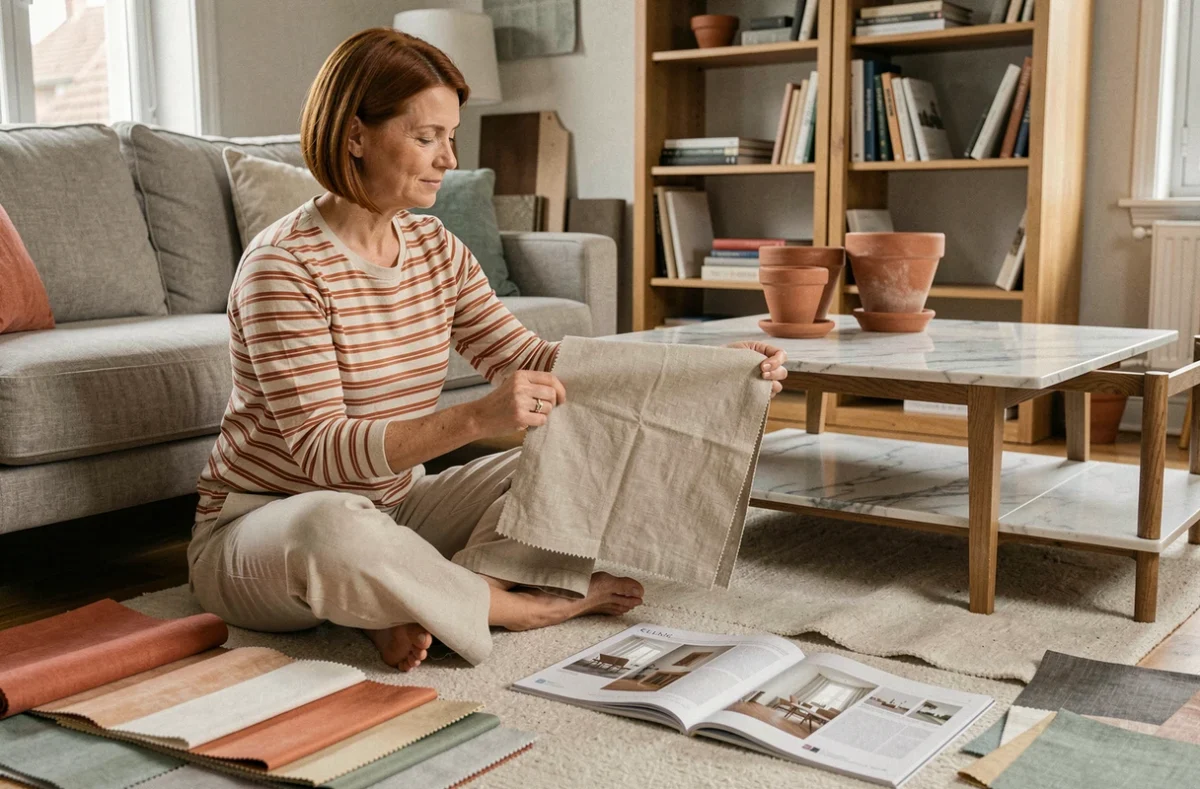
Choosing furnishings for your home involves decisions that go beyond decor. The chemical composition of a panel, the orientation of a window and the history of a second-hand piece all affect everyday quality of life. Keeping these factors in mind when you shop is what separates a home that simply looks good from one that is genuinely comfortable.