The transformation of oats does not follow a single path. Some products retain the whole grain, while others undergo modifications aimed at changing their texture, glycemic index, or digestibility. Nutritional recommendations do not always clearly distinguish between these different forms, creating confusion in their daily use.
A serving of oat flakes does not provide exactly the same nutrients as a serving of oat flour, and the effects on satiety or blood sugar vary depending on the preparation. The equivalence with other flours, such as corn or quinoa, adds a level of complexity rarely addressed in standard dietary advice.
The different forms of oats: flakes, flour, bran… what do they really hide?
It is impossible to confuse an oat flake with oat flour, yet the temptation is great to lump them together. Oats seem familiar, but the reality behind this term is far less uniform than it appears. On the shelves, you can find: oat flakes, oat flour, oat bran. Each offers its own set of characteristics, textures, and benefits.
The starting point is the whole oat grain. After steaming, it passes through rollers to become flakes, preserving the husk and germ. This explains their richness in fiber, protein, B vitamins, and minerals. Flakes sneak into everything: raw or cooked, in porridge, muesli, breads, granolas, pastries, smoothies.
To fully understand what differentiates these products, we need to detail their origin and transformation:
- Oat bran comes from the outer layer of the grain. Its concentration of soluble fiber and protein surpasses other forms, making it valuable for satiety and gut balance.
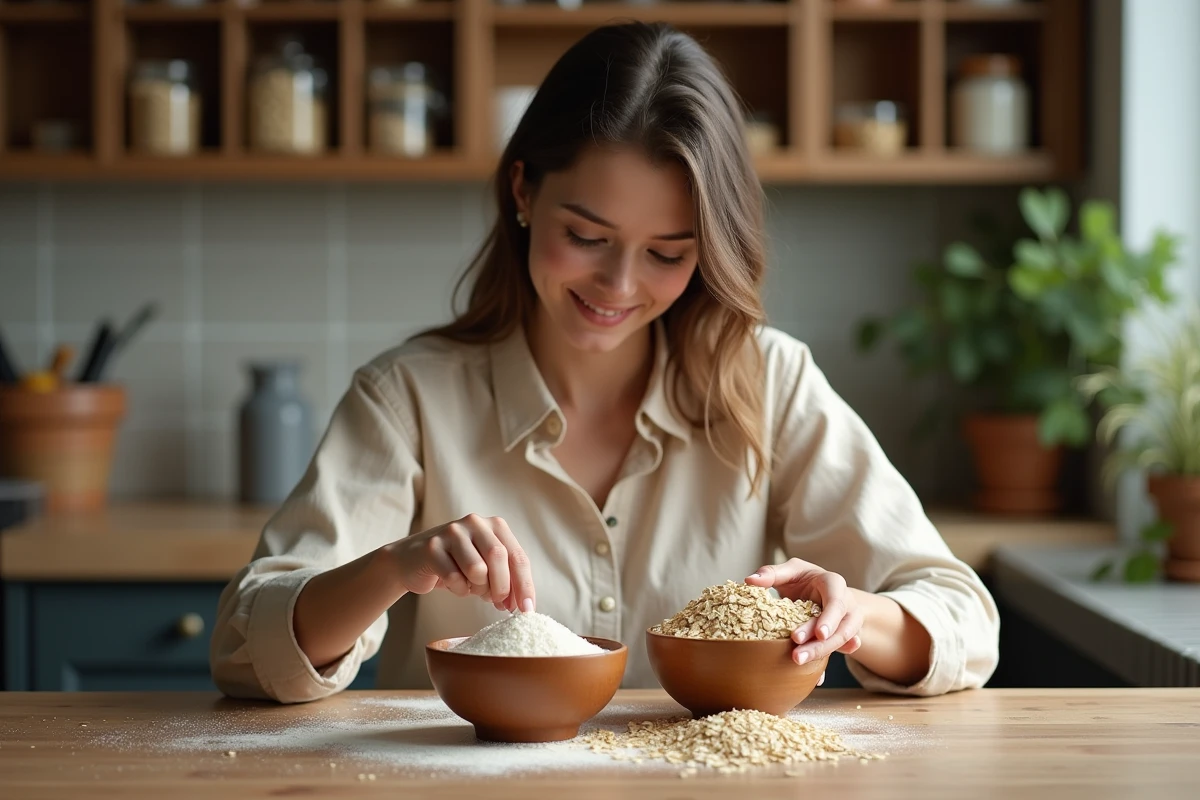
- Oat flour is obtained by finely grinding the grain. It is used to thicken preparations, enrich recipes for breads, desserts, or even pizza crusts. The difference between oat flour and oat flakes lies in the structure, the amount of soluble fiber, and the speed of absorption, which directly affects blood sugar and culinary uses.
| Oat Flakes | Oat Flour | Oat Bran | |
|---|---|---|---|
| Origin | Whole grain, rolled | Ground grain | Outer husk |
| Use | Porridge, bars, muesli, breads | Pastries, thickener, pasta | Porridge, muesli, desserts, savory dishes |
| Composition | Fiber, protein, vitamins, minerals | Soluble fiber, iron, complex carbohydrates | High fiber, protein |
Each form has its secrets: texture, digestibility, satiating effect, role in meals. Navigating between these variants means giving oats a well-informed place in your diet, far from the generalizations often conveyed.
Oat flour or oat flakes: what are the nutritional differences and health benefits?
It is often believed that only the form differs. In fact, everything changes: the composition, how the body absorbs nutrients, the effects on energy and hunger sensation.
Oat flakes, derived from the whole grain, boast an impressive density of dietary fiber (10 g per 100 g), particularly beta-glucans. These soluble fibers form a viscous gel in the intestine, slowing the rise of glucose, helping to balance blood sugar, and contributing to lowering LDL cholesterol. The result: hunger fades for longer, a boon for those monitoring their weight or blood sugar.
Oat flour, due to its grinding, is easier to digest. However, the glycemic index tends to rise, as carbohydrates are released more quickly. Nevertheless, it retains a good amount of soluble fiber, plant protein (13.5 to 15 g/100 g), and various minerals: iron, magnesium, potassium, calcium, zinc. B vitamins also play a role in vitality and recovery, particularly appreciated after exertion.
Oat bran goes even further, accumulating more fiber (15 g/100 g) and protein (17 g/100 g), while being lower in calories (330 kcal/100 g compared to 370 kcal/100 g for flakes). It also contains antioxidants (avenanthramides, polyphenols) and phytic acid, a double-edged sword: protective effect against inflammation and oxidative stress, but possible reduction in the absorption of certain minerals.
In summary, oat flakes and oat flour offer converging benefits: improved transit, better blood sugar management, enhanced satiety. Yet it is the details—particle size, preparation, proportion of beta-glucans—that make the difference for digestive and metabolic health.

How to choose the right type of oats according to your needs and how it compares to other flours
The choice of oat product primarily depends on your routine, cravings, and constraints. Oat flakes, derived from the whole grain, are great allies for breakfast or sports snacks. Their high content of fiber and beta-glucans promotes a lasting feeling of fullness, a valuable aid during a weight loss diet, in diabetes prevention, or for maintaining energy during intense training. They can be added raw to muesli, cooked in porridge, or used in bread and cereal bar recipes. Depending on activity and metabolism, the ideal portion often ranges between 30 and 40 grams per day.
Oat flour stands out for its versatility. It fits well in cakes, breads, desserts, smoothies, or as a natural thickener. Its fineness makes it accessible to elderly people or those with digestive difficulties. For a gluten-free diet, it is an interesting alternative, provided that contamination is checked, as the avenin it contains is generally well tolerated.
When comparing the various flours available, oats stand out due to their richness in soluble fiber, protein, B vitamins, iron, magnesium, and potassium. Few other flours display such a nutritional balance combined with a low glycemic index. It is better to opt for products from organic farming and avoid those loaded with sugar, additives, or saturated fats. As for oat bran, it is aimed at those looking to improve transit or lower their cholesterol.
To make the most of oats, vary the preparations. Add flakes to fresh fruits, plant milk, or nuts. Use oat flour in a pizza dough, a dessert, or a smoothie. The different textures and flavors allow oats to adapt to every situation, without ever sacrificing pleasure or nutritional quality.
Oats, in all their forms, invite themselves to our plates with a range of benefits and possibilities. It is up to each individual to compose their balance, in line with their needs and current desires.