
The GT Garden TT-GD520 auger is suitable for both individuals installing a fence and landscapers dealing with clay or rocky soils. Its two-stroke engine and reducer drive system make it a common tool in the French market for single-operator thermal augers. Behind its seemingly simple handling, several maintenance and adjustment points determine its longevity and user safety.
Fuel mixture and priming the GT Garden auger engine
The two-stroke engine of the TT-GD520 operates with a gasoline-oil mixture. The manufacturer’s manual specifies a specific ratio that must be followed precisely: an approximate dosage degrades the segments and clogs the exhaust in just a few uses.
The priming goes through the primer pump, then the positioning of the choke before pulling the starter handle. Two common mistakes arise in field feedback. The first: flooding the engine by pumping too much fuel. The second: forgetting to push the choke back in once the engine is running, which causes stalling as soon as the bit encounters resistance.
To find the detailed step-by-step procedure, the GT Garden TT-GD520 auger manual remains the reference to keep handy during the first uses.
Safety and protective equipment for thermal augers
The warning labels affixed to the machine are not decorative. They remind users of five obligations: read the manual, wear a helmet with safety glasses, use noise-canceling headphones, wear non-slip boots, and keep approved protective gloves on at all times.
Noise from the auger and local regulations
The noise level of a thermal auger far exceeds that of an electric tool. In France, the hours of use for gardening equipment are set by prefectural decree, sometimes tightened by the mayor. No single national time slot applies.
Article R1336-5 of the Public Health Code prohibits specific noises that disturb the tranquility of the neighborhood. Since October 1, 2023, a violation can result in a fourth-class fine, up to 750 euros. Checking local decrees before starting the machine avoids both fines and neighborhood conflicts.
Professional exposure to noise
For professional use, individual hearing protection only covers part of the legal obligation. The Labor Code requires employers to assess noise exposure considering the level and duration of use. This assessment must be renewed whenever working conditions change, and measurements must be carried out according to the NF EN ISO 9612 standard.
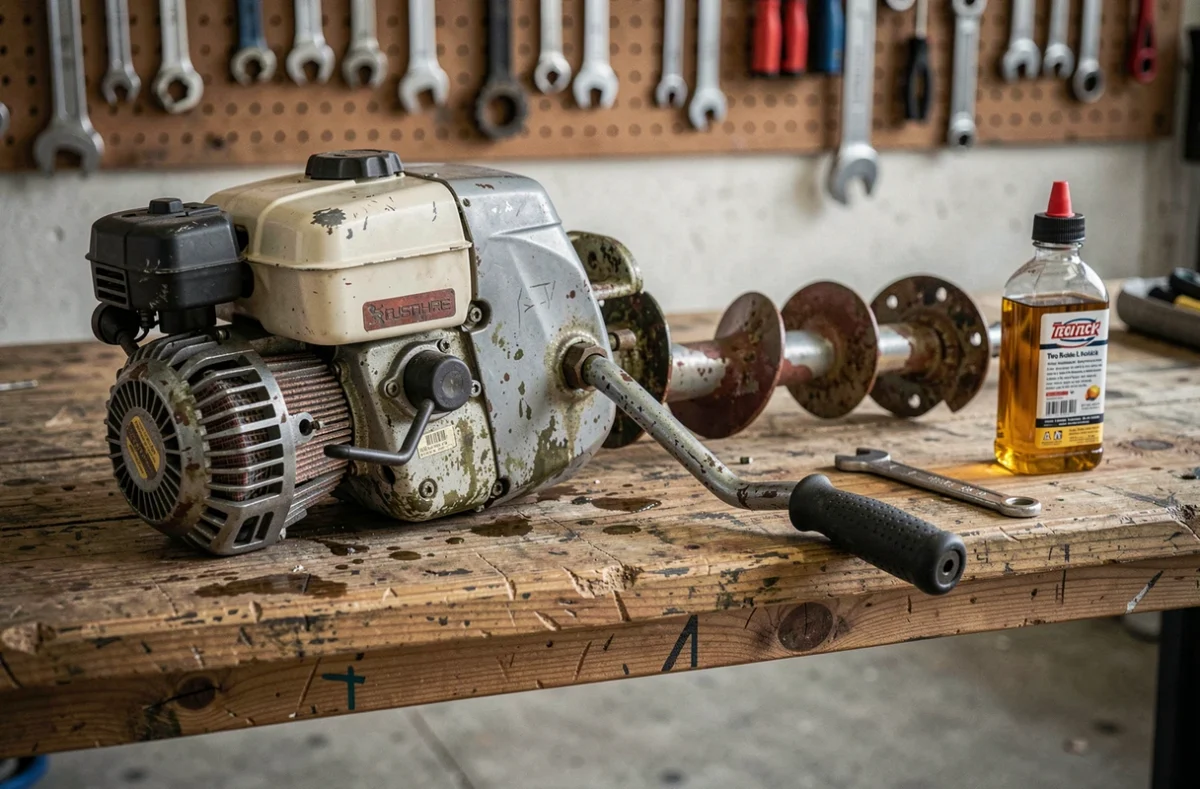
Routine maintenance of the engine and transmission
Maintaining the TT-GD520 relies on a few regular actions that directly affect the engine’s reliability and drilling quality.
- Air filter: to be cleaned after each extended work session. A clogged filter impoverishes the air-fuel mixture and causes the engine to overheat.
- Spark plug: to be inspected regularly. A black and oily deposit indicates a mixture that is too rich or poor-quality oil. Replace the spark plug rather than cleaning it indefinitely.
- Reducer (gearbox): greasing the angle transmission is often neglected. A dry-running reducer generates noticeable mechanical play in the handles, then breaks.
- Throttle cable: check the tension and absence of friction points. A loose cable prevents the engine from revving and makes drilling laborious.
Before any prolonged storage period, drain the fuel tank. Stagnant mixed gasoline for several weeks forms deposits in the carburetor, the primary cause of difficult starting at the beginning of the season.
Choosing bits and adapting to soil type
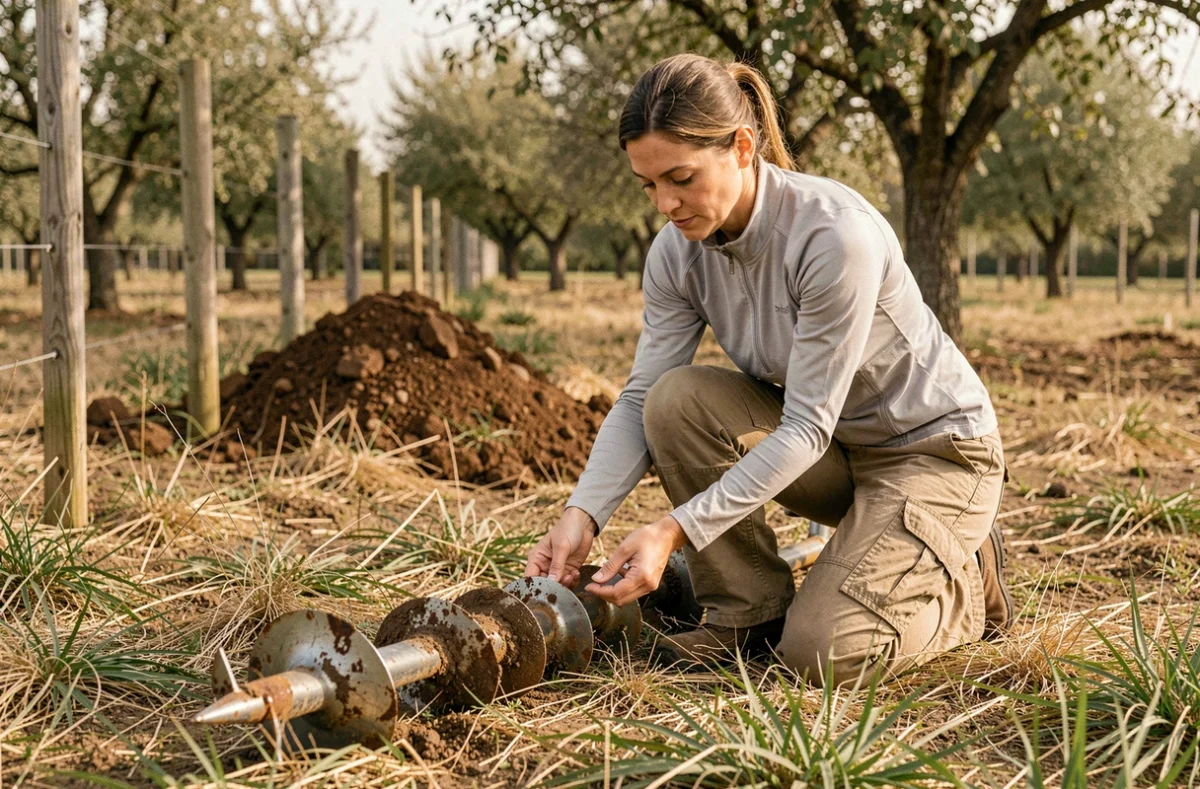
The bit is not included as standard with all versions of the TT-GD520. This point surprises some buyers, but it makes sense: the diameter and profile of the bit depend entirely on the soil and the project.
A loose and sandy soil can be drilled with a standard flat-blade bit. A clay or compact soil requires a tighter pitch bit to prevent the earth from clogging the auger. On rocky terrain, field feedback varies on this point: some users recommend reinforced bits with carbide tips, while others prefer to pre-drill with a smaller diameter before widening.
The machine’s chassis accepts several bit diameters. Checking the compatibility of the drive shaft remains the basic precaution before purchasing any third-party bit.
Troubleshooting the TT-GD520 auger
Three situations concentrate the majority of service calls for this type of machine.
The engine won’t start. In most cases, the cause is expired fuel or a clogged carburetor. Draining, cleaning the air filter, checking the spark plug, and then priming according to the manufacturer’s procedure resolves the issue without workshop intervention.
The engine runs, but the bit does not engage. The centrifugal clutch or reducer is at fault. A worn clutch slips without transmitting torque to the reducer. This diagnosis requires partial disassembly.
The machine vibrates abnormally. A bent bit after hitting a stone, or play in the chassis attachment, causes vibrations that fatigue the operator and accelerate mechanical wear. Visually inspect the bit and tighten the chassis bolts before each use to remain the most effective preventive action.
The GT Garden TT-GD520 thermal auger remains a reliable machine as long as the mixture dosage, transmission greasing, and replacement of consumables at the first signs of wear are respected. Storing the machine with an empty tank and in a dry place extends its lifespan well beyond what outdoor storage tolerates.