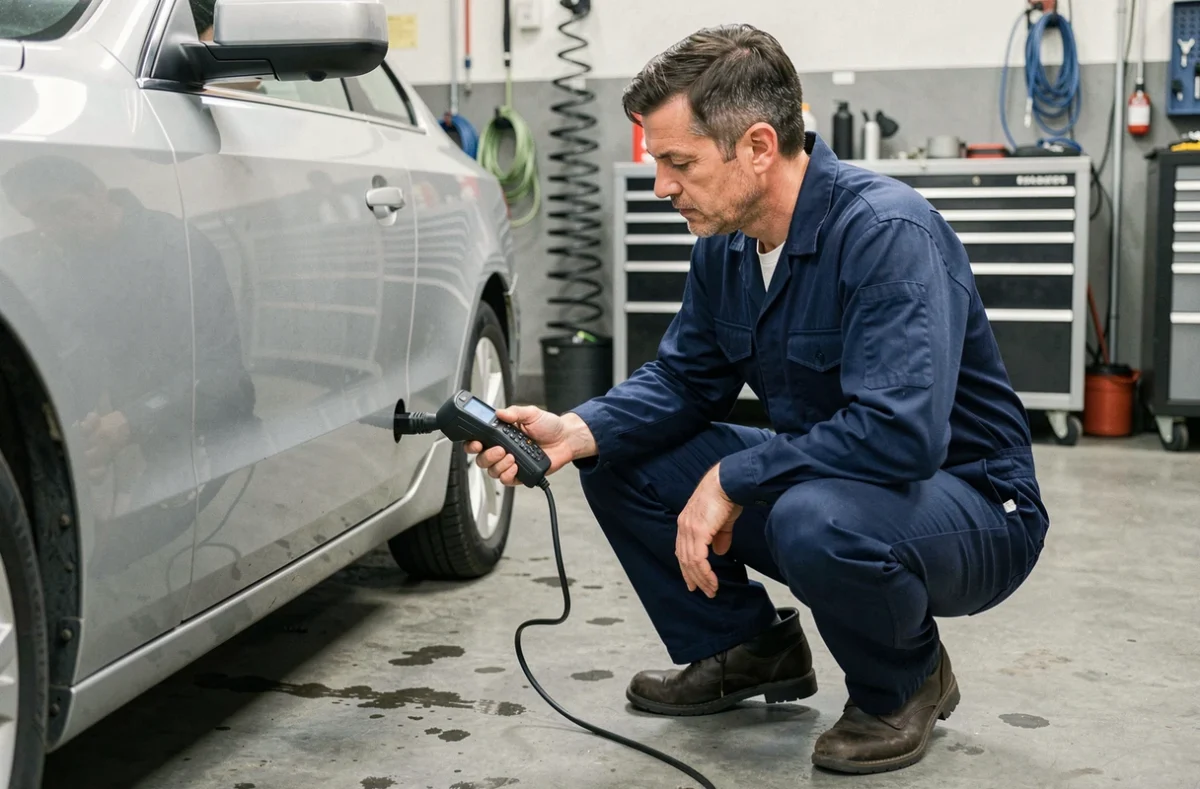
The automotive diagnosis is no longer limited to connecting a scanner to the OBD port of a thermal vehicle to read a fault code. Since the entry into force of the delegated regulation (EU) 2026/699 on June 23, 2026, ADAS systems and traction batteries are now included in the scope of diagnostics, and the tools themselves are evolving. Understanding these changes allows for better vehicle maintenance, whether one goes through a professional or uses an OBD2 reader at home.
European Regulation 2026/699 and Access to OBD Data: What Changes in Practice
Adopted on March 23, 2026, this delegated regulation introduces additional protections for operations that permanently modify the behavior of an ECU: tool authentication, access control, traceability. However, reading fault codes or the VIN remains accessible without authentication in most cases.
The distinction between reading and writing becomes the pivot of diagnostics. An individual equipped with an OBD2 scanner costing a few dozen euros can still query their vehicle to identify a check engine light. But reprogramming an ECU or coding a new sensor now requires a certified tool and an identification procedure.
For independent workshops, the same regulation requires manufacturers to provide the necessary information for calibrating driver assistance systems and diagnosing traction batteries. The resources available on diagnostique-automobile.fr allow tracking these regulatory developments and their practical consequences on the choice of diagnostic tools.
Diagnosis of Electric and Hybrid Vehicles: A Safety-Oriented Approach
On a thermal vehicle, a poorly conducted diagnosis may at worst erase a useful code. On an electric or hybrid vehicle, the voltages involved in the battery pack make certain manipulations dangerous without proper training.
Professional training distinguishes several levels of electrical authorization for working on these high-voltage architectures. Diagnosing a traction battery is not limited to measuring overall voltage: it is necessary to be able to query the health status of each module, identify a cell imbalance, and determine whether the module is replaceable or if the entire pack needs to be addressed.
Regulation 2026/699 requires manufacturers to make this data accessible to independent repairers. In practice, field feedback varies on this point: some manufacturers provide protocols late, and multi-brand tools do not yet cover all recent electric models.
What the Consumer OBD2 Scanner Doesn’t See
A standard OBD2 reader communicates with the engine ECU via standardized protocols. On an electric vehicle, the BMS (Battery Management System) often uses proprietary protocols that are inaccessible to entry-level tools. Therefore, a complete diagnosis of an electric vehicle requires a professional tool or manufacturer software.
This limitation also applies to ADAS systems. Recalibrating an emergency braking camera after a windshield replacement, for example, requires specific equipment and calibration data that the manufacturer must provide, but which do not pass through the standard OBD port.
Choosing a Diagnostic Tool Suitable for Your Use
The diagnostic tool market is segmented into three categories that meet very different needs. Confusing these categories leads to unnecessary purchases or incomplete diagnostics.
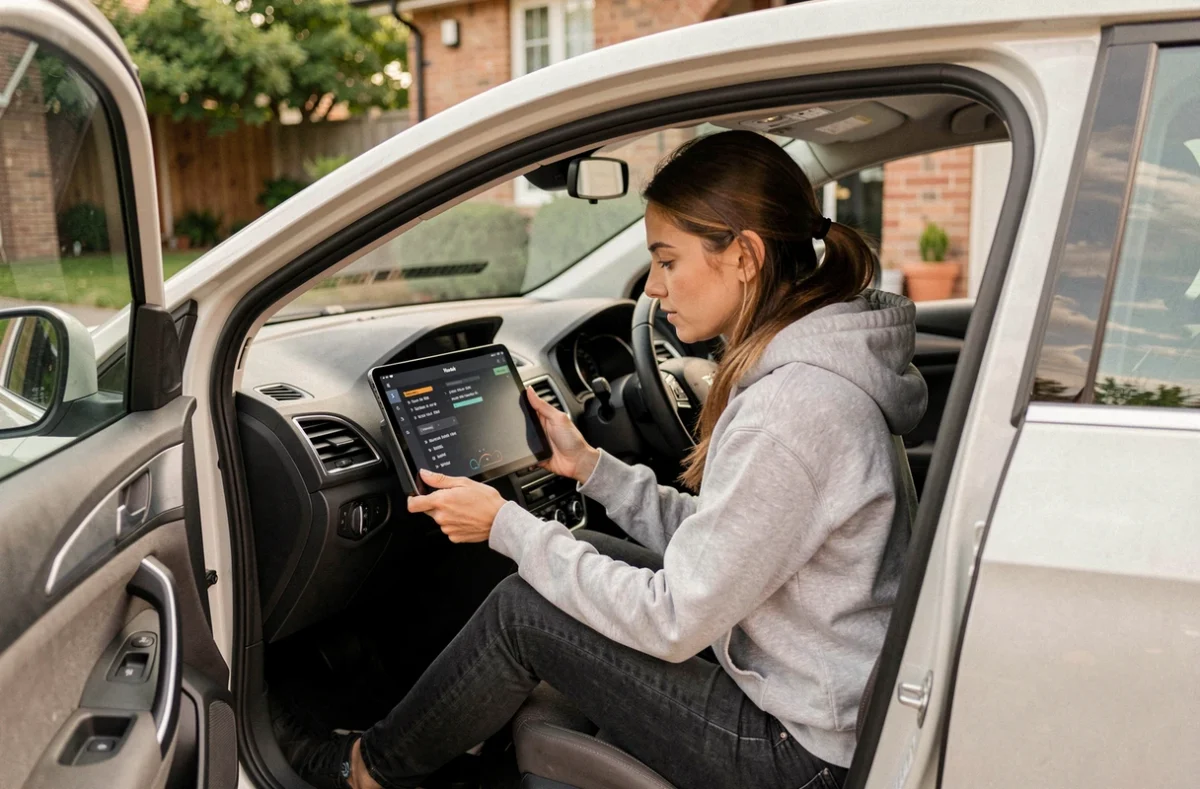
- Bluetooth or Wi-Fi OBD2 dongles, paired with a mobile app, allow reading and erasing generic fault codes (P0xxx codes). They are sufficient to understand a check engine light on a recent thermal vehicle and monitor a few parameters in real-time (RPM, temperature, pressure)
- Multi-brand diagnostic scanners access manufacturer-specific codes, data from secondary ECUs (ABS, airbag, air conditioning), and sometimes allow coding operations. Their price is significantly higher than dongles, but they cover a much broader diagnostic spectrum
- Manufacturer tools or licensed professional software offer complete access to advanced functions: reprogramming, ADAS calibration, high-voltage battery diagnostics. Their cost and complexity reserve them for workshops
A low-cost dongle will never replace a professional scanner for in-depth diagnostics. However, for an owner who simply wants to understand why a warning light is on before making an appointment, the dongle remains a relevant investment.
Interpreting Fault Codes: Beyond Simple Erasure
Erasing a fault code without understanding its cause is the most common and counterproductive practice. A P0420 code, for example, indicates insufficient catalytic efficiency. Erasing it makes the warning light disappear for a few driving cycles, but the mechanical issue persists and the code reappears.
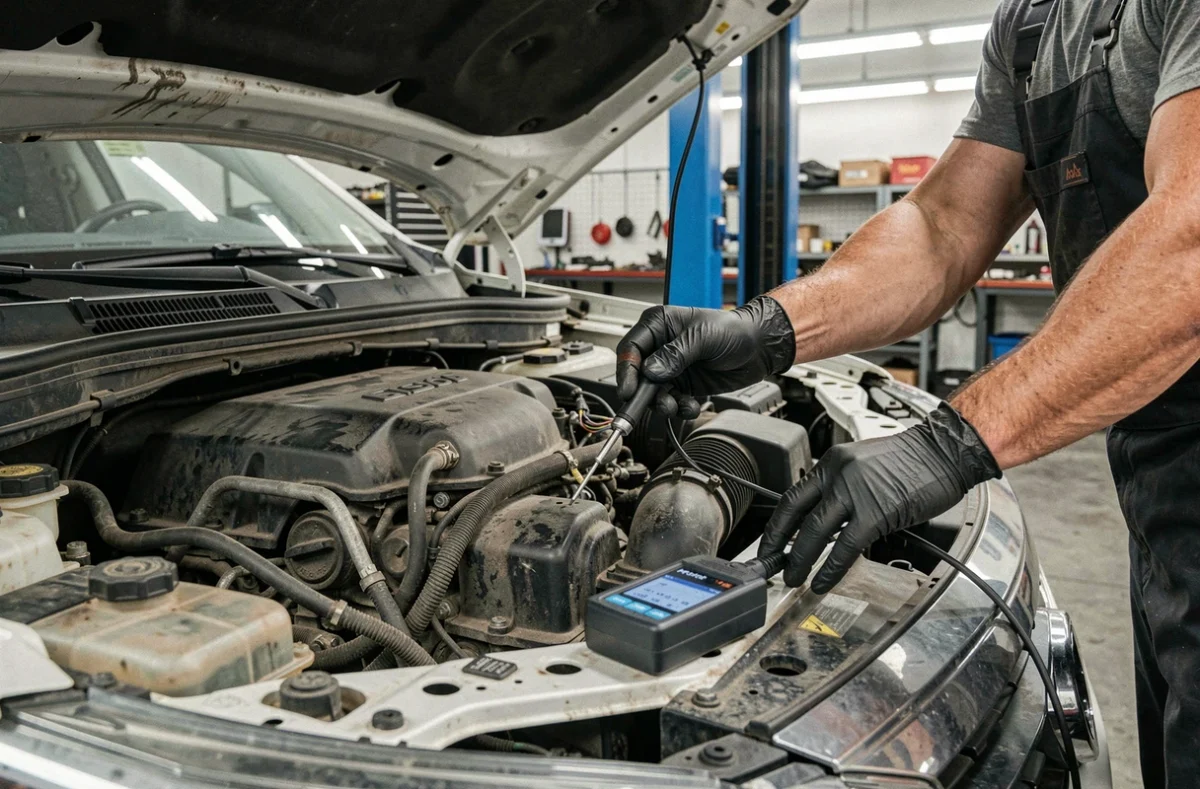
A fault code is a symptom, not a diagnosis. The P0301 code indicates a misfire in cylinder 1, but the cause could be a worn spark plug, a faulty coil, a clogged injector, or a compression issue. Only the cross-analysis of several real-time parameters (fuel pressure, ignition timing, lambda values) can lead to the fault.
Generic Codes and Manufacturer Codes
Codes starting with P0 are standardized and readable by all OBD2 scanners. Codes starting with P1, C1, B1, or U1 are manufacturer-specific. A basic dongle sometimes displays them, but without an associated database, the code remains a number without exploitable meaning.
Multi-brand tools integrate regularly updated databases that translate these proprietary codes. The quality of the database is as important as the hardware itself: a high-performing tool with an outdated database will produce erroneous interpretations on recent models.
Preventive Maintenance and Automotive Diagnostics: When to Intervene
Electronic diagnostics do not replace basic mechanical checks. They complement them. A scanner will not detect worn brake pads if the wear sensor has not yet reached its triggering threshold. It will also not signal an under-inflated tire on a vehicle without direct TPMS sensors.
The most reliable approach combines regular visual checks (levels, condition of belts, tire wear) with a scanner check during each service or before a long trip. This dual reading, mechanical and electronic, reduces the risk of unexpected breakdowns.
The European regulatory framework pushes in this direction by expanding the scope of accessible data. However, the tool does not make the mechanic: knowing how to read a fault code and knowing how to resolve it are two distinct skills. For an owner, autonomous diagnostics have their limits, and recognizing them is part of effective maintenance.