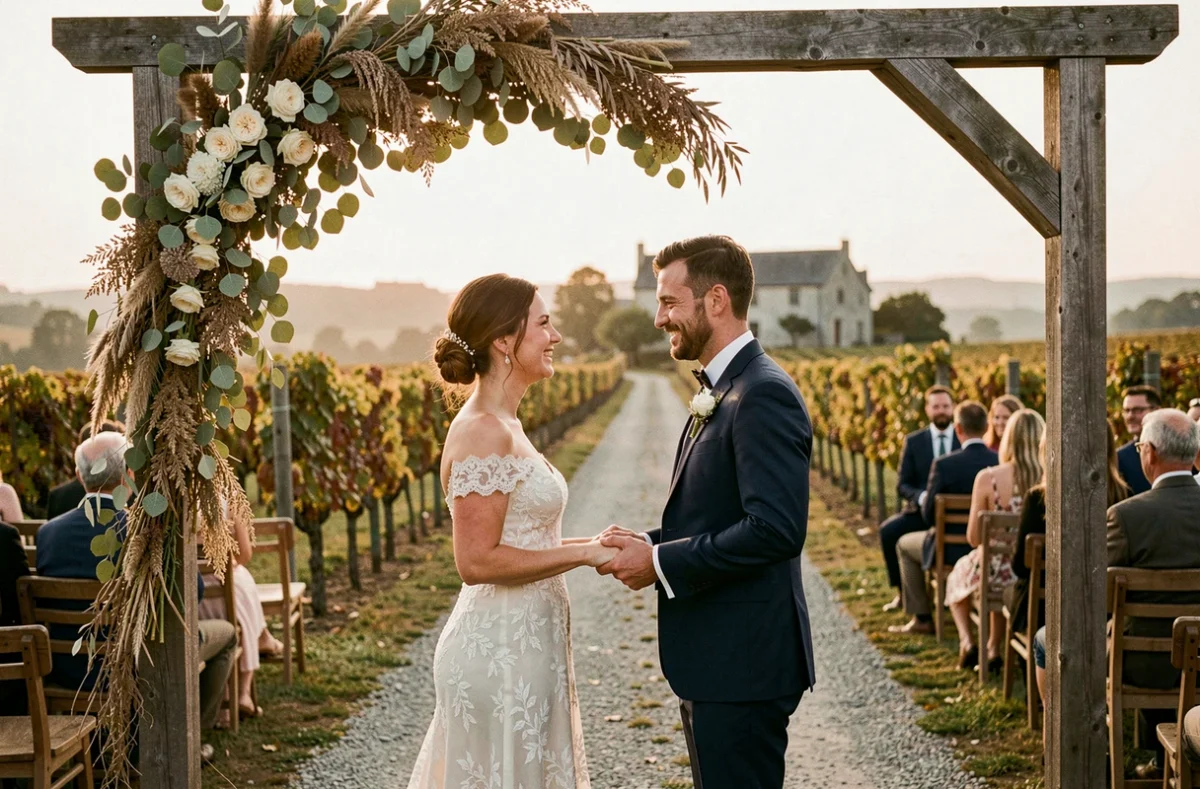
Organizing a personalized wedding involves making decisions on dozens of aspects, from the reception venue to the meal format. Each choice affects the guests’ experience, the overall budget, and the level of logistical constraints. Comparing these variables before diving in helps avoid last-minute adjustments and allows for a focus on the choices that matter most.
Wedding Budget: Where the Money Really Goes Depending on the Chosen Format
The reception format redistributes expenses in often counterintuitive ways. A cocktail dinner reduces the cost of table service, but it can increase the catering bill if there are many and varied dishes. A classic seated meal is more expensive in terms of staff, while the cost of ingredients per guest remains comparable.
| Reception Format | Main Expense Item | Budget Flexibility | Impact on Atmosphere |
|---|---|---|---|
| Seated Meal (fixed menu) | Service and floor staff | Low (fixed cost per guest) | Formal, limited interactions at tables |
| Cocktail Dinner | Diversity of catering dishes | Medium (adjustable based on number of dishes) | Free movement, increased conviviality |
| Buffet | Volume of food ordered | High (adjustable to actual number) | Casual, possible waiting line |
| Brunch (next day or same day) | Extended venue rental | Medium | Intimate, extends the festivities |
This table shows that the meal format determines both the atmosphere and the budget. Choosing a cocktail dinner to cut costs can work, provided the variety of dishes served is limited.
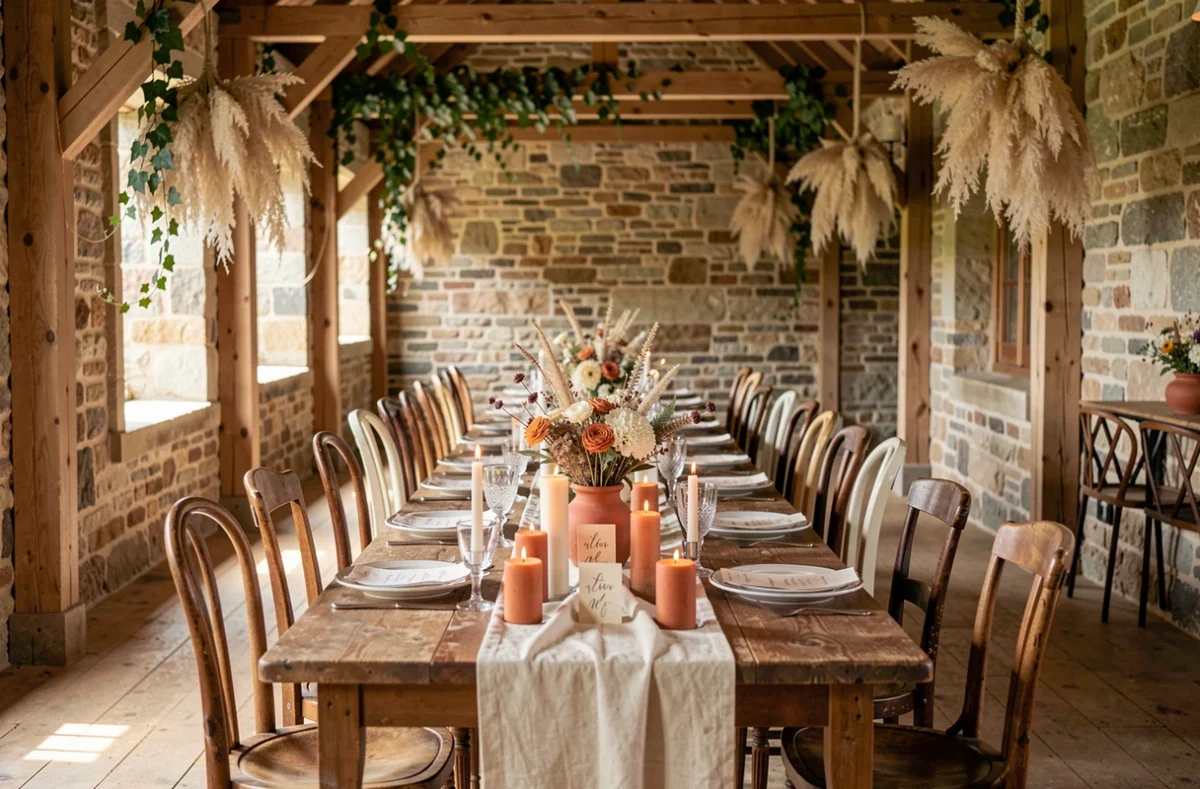
The reception venue typically absorbs the largest share of the total budget. Booking a private estate or a castle often involves a rental package plus catering fees, whereas some restaurants include both venue and meal in a single price. Couples looking to explore different options will find suitable choices for various reception configurations on the Mariage Unique website.
Regulatory Constraints of the Civil Ceremony: What the Town Hall Really Allows
Personalizing a wedding often starts with the ceremony, but the town hall strictly regulates the conduct of the civil ceremony. Music, speeches, audio equipment, duration: these elements are not always left to the couple’s discretion. Each municipality applies its own rules.
Checking the requirements with the relevant town hall several months before the big day helps avoid unpleasant surprises. Some town halls prohibit portable speakers, while others limit speeches from loved ones to just one. Any outdoor ceremony in a public space may require a specific occupancy permit.
Secular Ceremony as a Complement: A Real Lever for Personalization
The secular ceremony has no legal value, but this is precisely where personalization takes shape. Choice of officiant, texts read by loved ones, symbolic rituals: everything is adjustable. Organizing it at the reception venue eliminates travel and simplifies logistics.
- Plan a covered backup if the ceremony is outdoors, as no insurance covers the weather
- Limit the duration to about thirty minutes to maintain guests’ attention, especially with children
- Designate a coordinator to manage the microphone and the flow of speeches to avoid awkward pauses
A well-structured secular ceremony effectively replaces entertainment: it creates a meaningful moment without mobilizing additional budget for an external provider.
Image Rights of Guests: A Legal Angle Often Overlooked on the Big Day
The majority of couples plan for a professional photographer and encourage guests to share their own photos. However, the issue of image rights arises as soon as a photo is shared beyond the private circle.
Publishing an identifiable photo without consent exposes one to a dispute over image rights. This issue is particularly sensitive for children, whose images must be protected by their parents. Sharing an online gallery via a third-party service also requires checking who has access to the photos, how long they are kept, and how to delete them.
Private Photo Gallery Rather Than Public Social Network
Setting up a private shared album (dedicated app or cloud with restricted access) allows each guest to find the photos without them circulating publicly. Requesting explicit consent before any publication on a social network remains the simplest method to avoid tensions after the wedding.
Wedding Personalization: Balancing Originality and Logistical Burden
Each personalized element adds a layer of coordination. A welcome dinner the night before the wedding extends the guests’ experience but doubles the venue reservation and multiplies the meals to organize. Interactive culinary activities (cocktail bar, crepe workshop) require equipment, space, and a dedicated provider.
The most cost-effective decision is to focus personalization on two or three visible elements rather than spreading the effort across a dozen details. A strong theme reflected in stationery, decoration, and menu creates a coherence perceived by guests without multiplying providers.
- One significant surprise element (entrance of the couple, unexpected first dish, unique entertainment) is better than five forgotten gadgets
- Decoration is best entrusted to a single provider who manages the complete scenography, rather than three separate suppliers
- Digital organization tools (RSVP forms, address lists) deserve a privacy check: who accesses the data, and for how long
The financial pressure increases with the degree of personalization. A highly staged wedding can generate disproportionate stress compared to the memory it leaves. The balance between originality and simplicity depends on the number of guests, the available budget, and the time the couple can dedicate to coordination.
The most memorable weddings share a common point: they reflect a deliberate choice rather than an accumulation. Three strong decisions regarding the venue, meal format, and a personalized ceremony moment are enough to create a day that guests will still talk about years later.