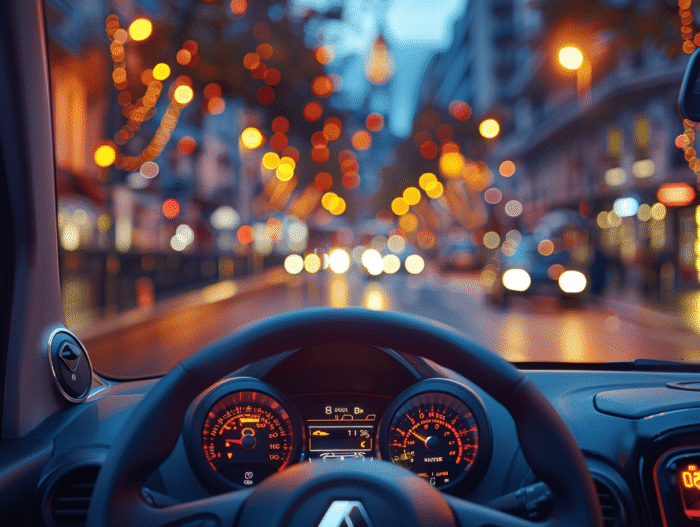
The Renault Twingo, a popular city car, is equipped with a dashboard that, with its multiple warning lights, communicates vital information to the driver. These indicators can signal both active functions and alert to malfunctions or risks to the vehicle’s system. It is essential for owners to understand the meaning of each warning light to respond appropriately in case of activation. Ignoring these signals can lead to serious mechanical damage or compromise safety. A guide deciphering these icons is therefore an indispensable tool for any Twingo driver, ensuring a calm and informed driving experience.
Understanding the Twingo Dashboard Warning Lights: Practical Guide
When driving your Twingo 3, the dashboard serves as a communication interface between the vehicle and you. Take the time to understand the meaning of the Twingo warning lights; understanding them is key to safe driving and optimal maintenance. Each light, through its color and symbol, corresponds to a specific function or a precise diagnosis of your car’s condition.
The Stop light, for example, illuminates to signal an anomaly that should not be ignored: braking issues, insufficient engine oil level, or malfunctioning cooling system. Its red color demands immediate attention and often implies that the vehicle should be stopped and examined without delay to prevent further damage.
Next is the wrench light, which indicates that it is time to perform periodic maintenance on your Twingo. This warning light, often accompanied by a message on the dashboard, reminds you of the maintenance needs to ensure the longevity and reliability of your vehicle. Consult your owner’s manual or contact a qualified mechanic to carry out the necessary checks and repairs.
An orange light may inform you of the activation of certain equipment in your car, such as the position lights or high beams. However, a persistent orange light may signal a fault that requires further diagnosis. Unlike red lights, orange lights suggest that you consult a specialist at your next opportunity, without necessitating an immediate stop.
Knowing and interpreting the dashboard lights of your Twingo 3 is essential for taking appropriate measures and ensuring the safety of your driving environment. Follow these indications, consult your owner’s manual for specific details, and do not hesitate to reach out to professionals for an accurate dashboard diagnosis and compliant Renault Twingo maintenance.
What to Do If a Warning Light Comes On in Your Twingo: Steps and Advice
In the event of the Stop light illuminating, assess the severity of the situation. This light, related to braking issues, insufficient oil level, or cooling system malfunctions, requires prompt action. Immediately consult the owner’s manual to identify the appropriate emergency protocol; it contains detailed instructions for each situation. If the problem exceeds your expertise or if the light persists, head to a competent mechanic for a thorough diagnosis.
When the wrench light lights up, it serves as a reminder for the periodic maintenance of your Twingo. In this case, the intervention of a professional is advised to keep your vehicle in good working order. The mechanic will be able to perform the necessary checks and reset the light once the maintenance is completed. Follow the manufacturer’s maintenance recommendations to avoid the emergence of future mechanical problems.
Regarding an orange light, such as that for position lights or high beams, a check of the activation of these systems is necessary. If the light remains on while the systems are off, or if you notice an anomaly, the owner’s manual can often provide a first indication of the course of action. In case of doubt, do not hesitate to consult a specialist to avoid any risk related to a potential failure of your vehicle’s lighting system.