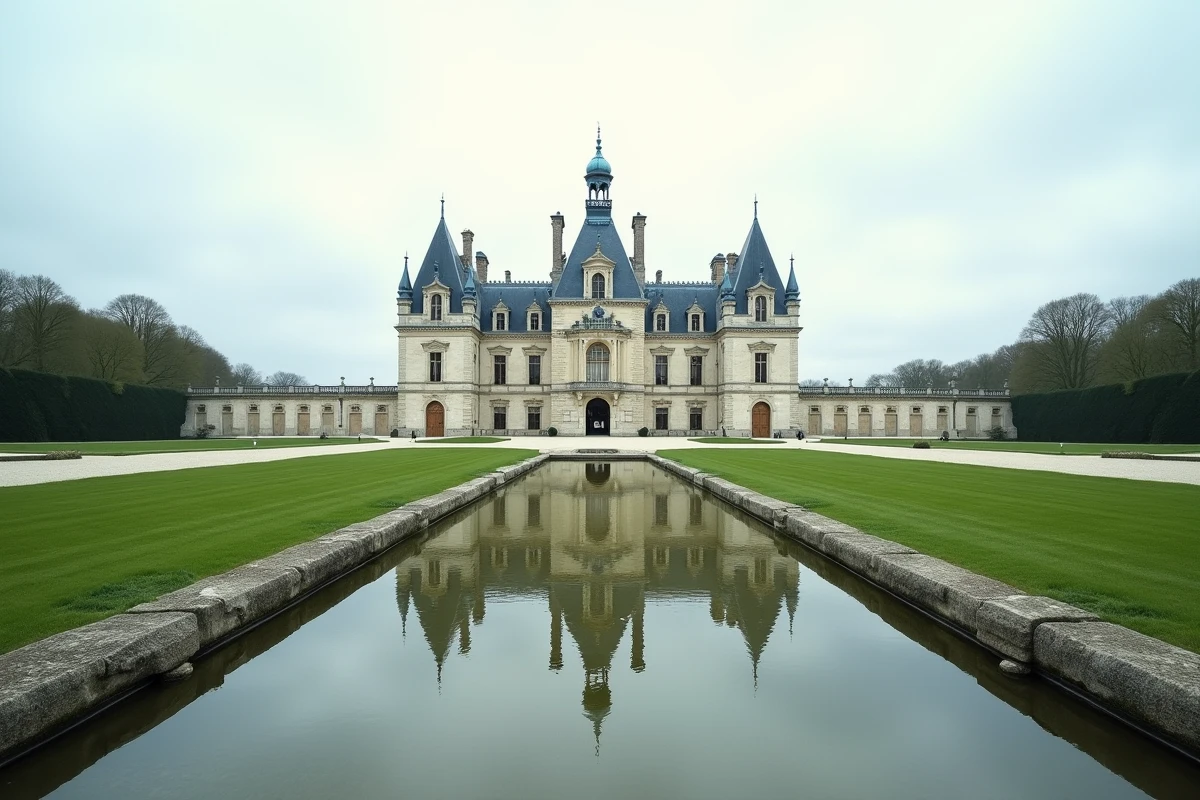
The Château de Chambord is not for sale. Owned by the French state and managed as a public industrial and commercial establishment (EPIC) since 2005, it inherently escapes any logic of real estate transaction. Attempting to assign it a market value is akin to posing a question without a direct answer, at the intersection of public law, monumental history, and heritage insurance.
Legal Status of Chambord: Why No Sale Price Exists
The National Domain of Chambord is not a transferable asset. Its status as an EPIC ties it to the public heritage of France, just like a national museum or a classified monument owned by the state. No sale has ever taken place, and French legislation on historical monuments makes such an operation legally improbable.
This distinction radically changes the approach to the question. When we talk about the “value” of Chambord, we are not referring to a price per square meter, nor to an estimate comparable to that of a private château in Sologne. The value of Chambord is heritage-based, symbolic, and insurance-related, never transactional.
Any valuation of the Château de Chambord confronts this reality: we can quantify restoration costs, ticket sales revenue, and tourist appeal, but not a transfer price for an asset that no one can acquire.
Restoration Costs and Public Funding: The Real Figures of the Château de Chambord
While market value remains an abstraction, the sums invested to maintain Chambord provide a concrete scale. In May 2026, Le Figaro revealed a new funding dossier concerning the restoration of the François Ier wing, described as very degraded. The Ministry of Culture rejected a project involving Puy du Fou, indicating that financial decisions surrounding the monument remain politically sensitive.
The château needs major financial support for its Renaissance section. This type of project on a building of this magnitude mobilizes public budgets over several years, without the precise amounts always being made public immediately.
The ongoing maintenance of the estate, which spans one of the largest enclosed parks in Europe, also represents a permanent burden. Chambord is not just a château; it is a forested territory, an ecosystem, and a complete tourist infrastructure.
Heritage Value of Chambord: The Weight of a UNESCO Classified Monument
The Château de Chambord is listed as a UNESCO World Heritage site within the Loire Valley. This international recognition adds a layer of legal protection and visibility that transcends national boundaries. In insurance terms, monuments of this category are covered by specific provisions, distinct from classic property insurance.
Several elements contribute to this non-market value:
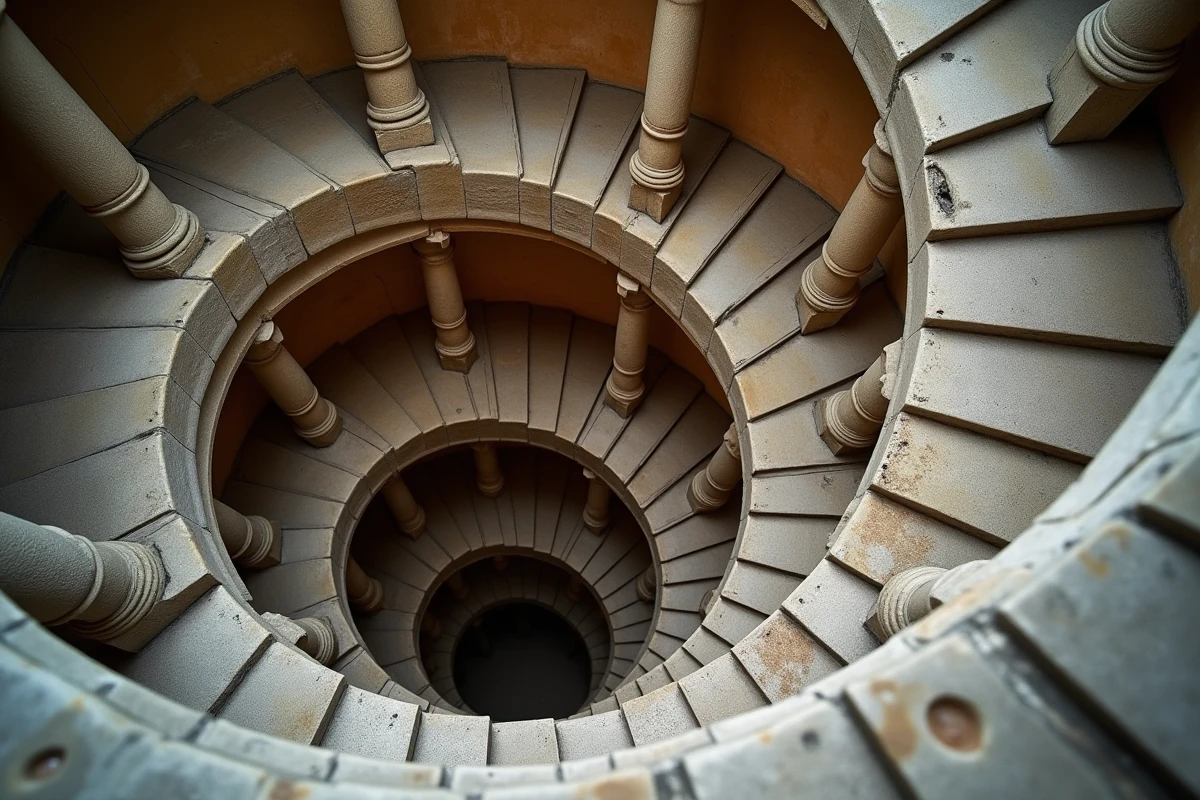
- The Renaissance architecture of the château, with its double spiral staircase attributed to the influence of Leonardo da Vinci, constitutes a unique feature in the history of French architecture.
- The enclosed forest domain surrounding the château is home to remarkable biodiversity and is subject to conservation programs distinct from the monument itself.
- Tourist attendance places Chambord among the most visited sites in France, generating revenue that contributes to its partial self-financing.
Chambord generates local economic activity that far exceeds ticket sales. The large flea market organized on the estate since 1995 has become one of the largest in France. Event uses, equestrian shows, and cultural programs complement the economic model of the site.
Comparison with the Market for Private Châteaux in France
To measure the gap between Chambord and the real market, one must look at what is actually sold. Private châteaux in Sologne or the Loire Valley change hands at prices that vary considerably depending on their condition, size, and land domain. The highest transactions for historical French châteaux reach several tens of millions of euros.
No château sold in France comes close to the characteristics of Chambord. The built area, the number of rooms, the monumental staircase, the sculpted terraces, the enclosed park: each parameter is extraordinary. Applying a price/square meter ratio derived from the private château market would yield a theoretical figure devoid of practical meaning.
On the other hand, this comparison highlights a often overlooked point: the annual maintenance costs of a château of this size exceed the financial capacity of any private owner. Chambord could not exist without public funding. This is also what renders the question of its market value purely rhetorical.
What François Ier Actually Built
The château was commissioned by François Ier starting in 1519, designed as a hunting lodge and showcase of royal power. The king only stayed there for a few weeks in total. The construction spanned over three decades, involving architects such as Pierre Nepveu and fitting into the current of the French Renaissance influenced by Italian models.
This story of royal commission, never completed during its initiator’s lifetime, adds an additional dimension to the question of value. Chambord has never been a place of domestic life. It was conceived as a symbol, and it continues to function as a symbol five centuries later.
The answer to the initial question ultimately boils down to one sentence: Chambord is worth what France is willing to spend to preserve it, year after year, project after project. It is a recurring cost, not a fixed price.